Shiratama Dango (Japanese Glutinous Rice Flour Dumplings) Recipe
Introduction
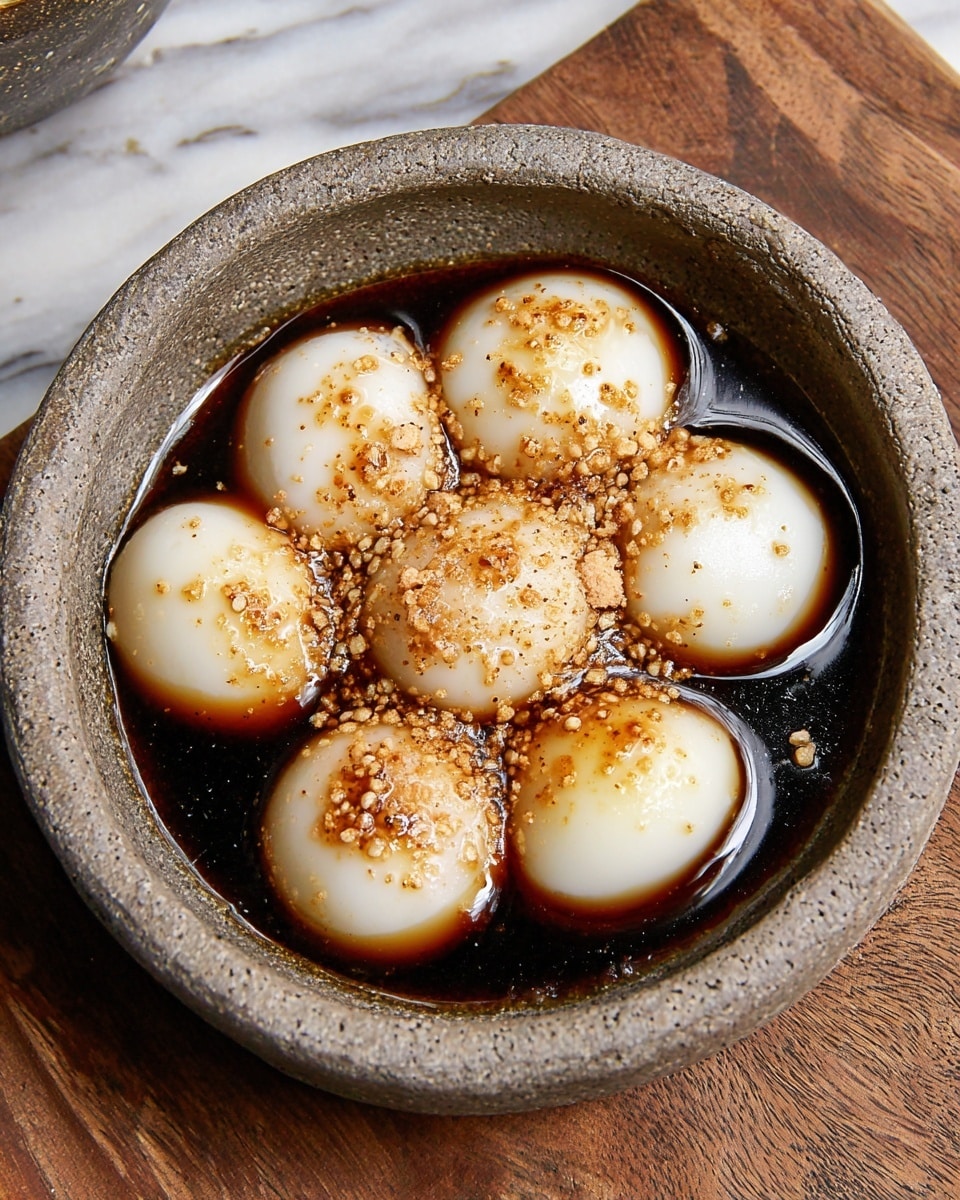
Shiratama Dango are soft, chewy Japanese rice flour dumplings that make a delightful treat. Light and versatile, they pair wonderfully with sweet toppings like brown sugar syrup and roasted soybean powder.
Ingredients
- 100 g glutinous rice flour shiratamako (or 90 g mochiko + 10 g potato starch)
- 90 ml water (if using shiratamako) or 80 ml water (if using mochiko mix)
- Optional: dark brown sugar syrup (kuromitsu)
- Optional: roasted soybean powder (kinako)
Instructions
- Step 1: If using shiratamako, whisk 100 g of the flour in a bowl. Pour half of 90 ml water into the bowl. If using mochiko, whisk 90 g mochiko and 10 g potato starch together, then pour half of 80 ml water into the bowl.
- Step 2: Mix with a spatula, then add the rest of the water gradually, kneading between additions, until you get a smooth dough with the texture of an earlobe. You may not need all the water.
- Step 3: Bring a pot of water to a boil. Meanwhile, divide the dough in half and roll each into cylinders. Cut each cylinder into 10 equal pieces, then roll each piece into a ball and press a small dent into the center. Place on baking parchment to prevent sticking.
- Step 4: Gently drop the dumplings into the boiling water. Use chopsticks to nudge them gently so they don’t stick to the bottom. Boil until they float, about 3 minutes.
- Step 5: When all have floated, set a timer for 1 minute. Prepare a bowl of ice water. Turn off the heat and transfer the dumplings to the ice water using a slotted spoon. Let cool for 5–10 minutes.
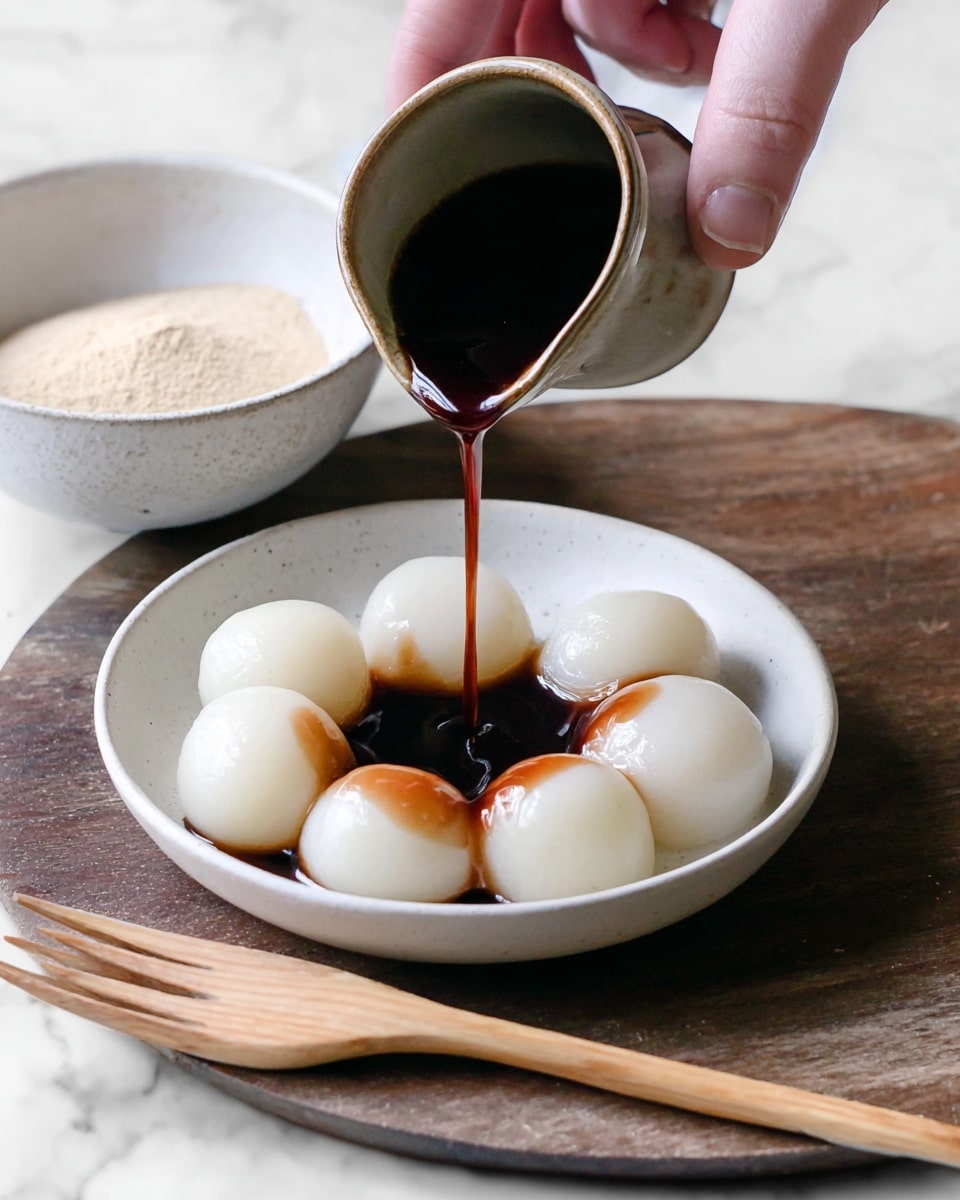
- Step 6: Drain and serve topped with dark brown sugar syrup (kuromitsu) and roasted soybean powder (kinako) as desired. Enjoy!
Tips & Variations
- Pressing a dent into the center of each ball helps the dumplings cook evenly and hold toppings better.
- If you can’t find kuromitsu or kinako, try drizzling honey or sprinkling toasted sesame seeds as alternatives.
- For a fruity twist, serve with fresh berries or sweet red bean paste.
Storage
Store leftover shiratama dango spaced out on a baking tray lined with parchment paper in the freezer for 1 hour. Then transfer them to a sealed freezer bag and keep for up to 1 month. Thaw by microwaving for 40-50 seconds at 600W or slowly in a bowl of water before serving.
How to Serve
Serve this delicious recipe with your favorite sides.
FAQs
Can I use regular rice flour instead of shiratamako or mochiko?
Regular rice flour won’t produce the same chewy texture as glutinous rice flour. It’s best to use shiratamako or mochiko for authentic, soft dumplings.
What if my dough is too sticky or too dry?
If the dough feels too sticky, add a little more rice flour gradually. If it’s too dry and crumbly, add water a few drops at a time until it reaches a soft, pliable texture.
PrintShiratama Dango (Japanese Glutinous Rice Flour Dumplings) Recipe
Shiratama Dango are traditional Japanese chewy rice flour dumplings made using glutinous rice flour and water. These small, soft balls have a delightful texture reminiscent of earlobes, boiled until they float and served chilled with sweet toppings such as kuromitsu (dark brown sugar syrup) and kinako (roasted soybean powder). This recipe offers options for using shiratamako or mochiko rice flours and includes tips for preparation, cooking, and freezing leftovers.
- Prep Time: 15 minutes
- Cook Time: 10 minutes
- Total Time: 25 minutes
- Yield: Approximately 20 shiratama dango 1x
- Category: Dessert
- Method: Boiling
- Cuisine: Japanese
- Diet: Gluten Free
Ingredients
Main Ingredients
- 100 g glutinous rice flour shiratamako (or 90 g mochiko glutinous rice flour + 10 g potato starch or tapioca starch)
- 90 ml water (if using shiratamako) or 80 ml water (if using mochiko)
Optional Toppings
- Dark brown sugar syrup (kuromitsu)
- Roasted soybean powder (kinako)
Instructions
- Mix the Flour and Water: Place 100 g of shiratamako in a bowl and whisk briefly. Pour half of 90 ml water into the bowl. If using mochiko, whisk together 90 g mochiko and 10 g potato starch, then add half of 80 ml water. Using a spatula, mix and gradually add the rest of the water, kneading in between until a smooth, pliable dough the texture of an earlobe forms. Do not use all the water if not needed.
- Shape the Dough: Boil a pot of water. Meanwhile, divide the dough in half (or into quarters/sixths if doubling or tripling). Roll each piece into a cylinder, cut into 10 equal pieces, then shape each piece into a small ball. Press the center of each ball slightly to create a dent. Place shaped balls on baking parchment to prevent sticking.
- Boil the Dango: Once the water is boiling, gently add shiratama dango to the pot. Use chopsticks to nudge them to prevent sticking to the bottom. Boil until the dumplings float to the surface, approximately 3 minutes.
- Cool the Dango: When all dango float, set a timer for 1 minute. While waiting, prepare a bowl of ice cold water. Turn off the heat and transfer the dango with a mesh spoon to the cold water. Let cool for 5-10 minutes.
- Serve: Drain the chilled dango and serve with optional toppings such as kuromitsu (dark brown sugar syrup) and kinako (roasted soybean powder) to taste.
- Freeze Leftovers: If you have leftover dango, arrange them spaced out on a tray lined with baking paper and freeze for 1 hour. Then transfer to a sealable freezer bag and store up to 1 month. To reheat, microwave for 40-50 seconds at 600W or thaw slowly in a bowl of water.
Notes
- Use only as much water as needed for a smooth dough; the amount may vary.
- Pressing a dent in the center of each ball helps them cook evenly and prevents rolling.
- Boiling until the dango float ensures they are cooked through.
- Cooling in ice water stops the cooking process and gives a pleasurable chewy texture.
- Kuromitsu (dark brown sugar syrup) and kinako (roasted soybean powder) are traditional toppings but can be substituted with your choice of sweeteners or powders.
- Freeze leftover dango quickly to retain texture and thaw gently to avoid sogginess.
Keywords: Shiratama Dango, Japanese dessert, glutinous rice dumplings, kuromitsu, kinako, chewy rice balls, mochiko, shiratamako